
Signs you need this
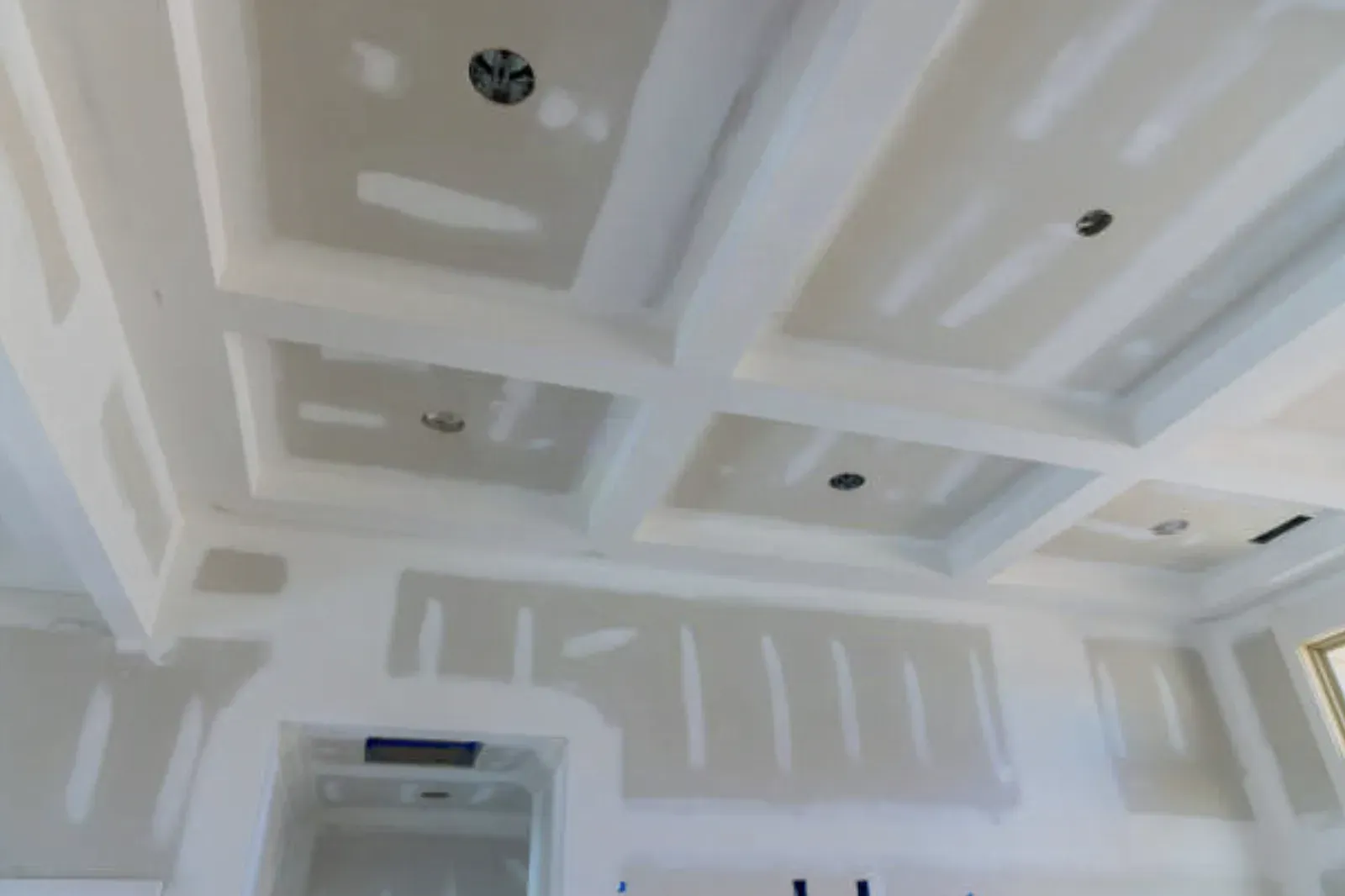
- • A room with board already hung, seams and screw heads visible, and no way to move forward with paint until the surface is finished
- • A general contractor with a hanging crew but no in-house finisher, or whose finisher fell behind and is holding up the paint schedule
- • A homeowner who assumed drywall meant one job and is surprised to learn mudding and taping is its own separate trade
- • Board hung and ready for a finisher to bring it to a paint-ready surface before the schedule can move forward
- • A general contractor's regular finisher unavailable or overbooked, with a second crew needed to keep a job on schedule
The Trade That Turns Sheets Into a Wall
Hanging board and finishing it are two different skill sets, and Brockton Precision Drywall treats them as separate stages even on jobs where the same crew does both. A hung wall is still a grid of flat rectangles with visible seams, screw heads, and corner joints. Finishing is the process that erases that grid: taping every seam, building up compound in progressively wider passes, and sanding until the wall or ceiling reads as one continuous surface rather than a collection of panels. It’s the stage most homeowners picture when they think of drywall work generically, even though it’s a distinct trade from the hanging that comes before it.
Why General Contractors Call a Finisher Separately
A meaningful share of this work comes from general contractors who self-perform or subcontract the hanging stage but don’t keep a dedicated finishing crew on staff, or whose regular finisher is booked out on another job. Brockton Precision Drywall picks up finish-only work regularly, starting with an inspection of the existing hang rather than assuming it’s clean. Fastener pops, uneven seams, and gaps left by a rushed hanging job all become the finisher’s problem if they’re not caught before the first coat goes on, so that inspection step isn’t optional even on a job where someone else did the hanging.
Choosing the Right Finish Level for the Room
GA-214 defines finish levels from 0 to 5, and most residential rooms in Brockton land at Level 4, tape and three coats at the seams, which holds up fine under standard flat or eggshell paint. Rooms with strong raking light, whether from a bank of windows or a run of recessed cans, tend to show every seam flashing under a Level 4 finish, which is why formal living rooms, accent walls, and anywhere a glossier paint sheen is planned often call for a Level 5 skim coat instead. Getting this decision right before the first coat starts matters, because upgrading from Level 4 to Level 5 after the fact means reopening finished work rather than building it in from the start.
Matching Texture So a Patch or Addition Disappears
Brockton’s mixed housing stock, from triple-deckers to postwar ranches and capes, carries a range of ceiling and wall textures, knockdown and orange-peel being the most common. When a finishing job covers new board in a room addition or a repair section next to an existing textured ceiling, matching that texture is part of the finish scope, not a separate service. A technically flat, well-taped wall that doesn’t match the texture next to it still reads as an obvious patch once paint goes on, so texture matching gets built into the plan whenever new finish work borders existing textured surfaces.
Reading the Wall the Way Paint Will
Every finished surface gets inspected under raking light before handoff, angled light from a work lamp or a window that exaggerates any unevenness the way afternoon sun or a ceiling fixture eventually will. That’s the same condition that reveals seam flashing, sanding marks, or a slightly proud screw head once paint is on, so checking for it before handoff catches problems while they’re still cheap to fix rather than after a painter has already primed the room.
Materials & standards
Products & materials we use
- USG Sheetrock joint compound
- National Gypsum Gold Bond
- FibaTape
- CertainTeed
Standards & codes we work to
- GA-214 finish levels (Level 0 through 5)
What the terms mean
- mud and tape
- joint compound
- feathering
- corner bead
- skim coat
- knockdown texture
- orange-peel texture
- raking light
- fastener pop
Options & variants
| Option | When it applies | Cost |
|---|---|---|
| Level 4 standard finish | Most residential rooms with flat or eggshell paint and standard lighting | Baseline finishing scope |
| Level 5 skim coat | Formal rooms, accent walls, or spaces with raking light where a Level 4 finish would show flashing | Additional labor for a full skim coat across the surface |
| Texture matching (knockdown, orange-peel) | Finishing needs to blend into an existing textured ceiling or wall elsewhere in the house | Requires matching existing texture technique and pattern |
| Finish-only on someone else's hang | Board is already up from another crew or a prior phase | Finisher confirms the hang is sound before starting coats |
What affects cost
- • Finish level required: a standard Level 4 finish takes less time than a smooth Level 5 skim coat across an entire room
- • Whether the existing hang is clean and flat, or whether the finisher has to correct fastener pops, uneven seams, or gaps left by whoever hung the board
- • Texture matching requirements, since blending new finish work into an existing knockdown or orange-peel texture takes more skill and time than a flat coat
- • Ceiling height and room size, since taller rooms and larger open spans take longer to coat and sand evenly
- • Lighting conditions in the finished space, since a room with strong raking light from windows or recessed cans shows imperfections a dimmer room would hide, which can push a project toward a higher finish level
What to expect
- 1
Inspect the hang
Brockton Precision Drywall inspects the hung board, whether hung by our crew or someone else, checking for flat seams, properly set fasteners, and any corner bead or trim that needs attention before coating starts.
- 2
Embed tape
Tape is embedded into the first coat of joint compound at every seam and inside corner, with corner bead set at outside corners.
- 3
Build and sand coats
Multiple coats of compound are applied and feathered progressively wider, sanding between coats to build a flat, blended surface.
- 4
Bring to finish level
The finish level is brought to what the project calls for, standard Level 4 or a smooth Level 5 skim coat, with texture applied and matched if the space calls for it.
- 5
Inspect under raking light
The finished surface is inspected under raking light before handoff, since that's the same lighting condition that will reveal any flaws once paint goes on.
When this isn’t the right call
- If the board itself isn't hung yet and framing is still bare, drywall installation and hanging is the better fit.
- If the walls in question are original lath and plaster rather than drywall board, plaster repair and plaster-to-drywall conversion is the better fit.
- If the surface has water damage or mold rather than just unfinished seams, water damage drywall repair or mold drywall replacement is the better fit.
- If the project is a commercial space needing a UL-listed fire-rated assembly finished to a documented standard, fire-rated drywall assembly is the better fit.
Frequently asked questions
What's the difference between Level 4 and Level 5 finish? +
Level 4 is the standard residential finish, with tape and three coats of compound at seams, suitable for most flat or eggshell paint. Level 5 adds a thin skim coat across the entire surface, used where raking light or a glossier paint would otherwise show seam flashing.
Can you finish drywall that someone else hung? +
Yes. Brockton Precision Drywall regularly finishes board hung by another crew or a general contractor's framing team, after inspecting the hang for flat seams and properly set fasteners before starting coats.
How many coats of mud does a wall actually need? +
A standard Level 4 finish typically takes three coats at the seams, tape embedding coat, fill coat, and finish coat, with sanding between each. A Level 5 skim adds a full-surface coat beyond that.
Can you match the texture on my existing ceiling? +
Yes. Knockdown and orange-peel are the two most common textures in Brockton's housing stock, and matching an addition or repair to an adjoining room's existing texture is a standard part of the finishing scope.
How long does drying and sanding take between coats? +
Each coat needs to dry fully before the next goes on, which typically adds a day per coat depending on humidity and room ventilation. A standard Level 4 finish usually runs three to four days from first coat to final sand.
Do you finish commercial spaces too? +
For commercial tenant improvements and fire-rated assemblies with documented finish requirements, see the fire-rated drywall assembly and metal stud framing services, which handle the commercial finishing scope specifically.