
Signs you need this
- • A recent drywall patch that's structurally fine but visibly flat against the surrounding knockdown or orange-peel texture, especially noticeable under afternoon light
- • A prior repair, done by another contractor or a DIY attempt, that reads as an obvious flat spot on an otherwise textured wall or ceiling
- • Newer construction, an addition, a converted garage, a remodeled room, that doesn't quite match the texture of the original part of the house
- • A patch or repair finished for a different reason, a leak, a hole, an electrical fix, where the finish work left the texture mismatched once it was painted
- • A renovation or addition nearing completion where the new drywall needs to blend seamlessly with the existing textured walls
Structurally sound is not the same as invisible
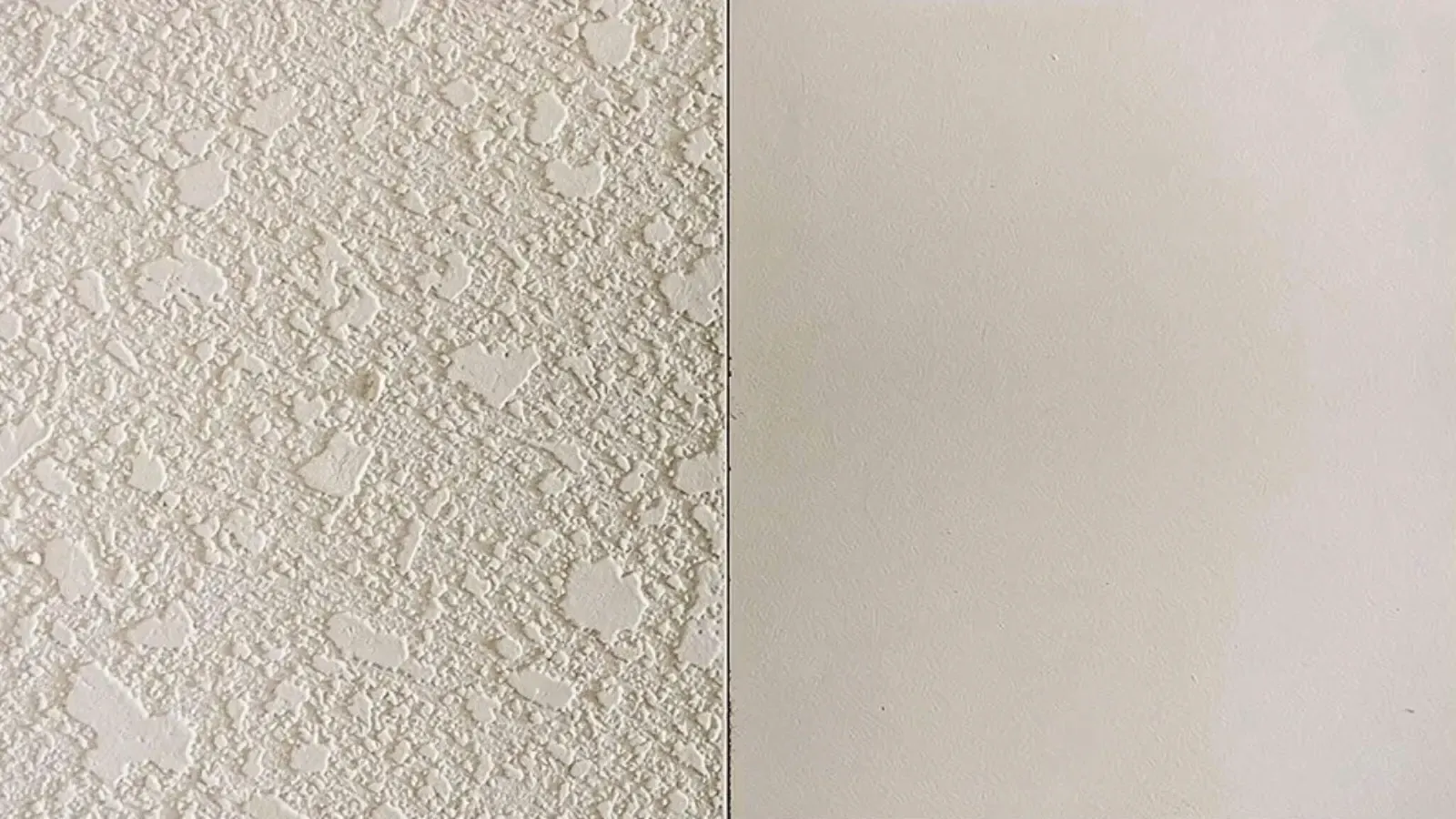
A patch can be perfectly repaired, solid, flush, fully cured, and still fail the customer’s actual standard if it doesn’t disappear into the wall around it. This is the gap texture matching fills. Along Brockton’s Route 24 and Route 27 commercial-industrial edge and in the newer construction and additions scattered throughout the city, knockdown and orange-peel spray textures are far more common than the hand-troweled plaster found in the older triple-decker and Victorian housing stock closer to the city center, and a smooth, well-sanded patch on either of those textures reads as an obvious flat spot the moment it catches afternoon light at an angle. Brockton Precision Drywall treats texture as the final, necessary layer of any repair on a textured surface, not an optional upgrade, because a technically correct patch that still stands out hasn’t actually solved the customer’s problem.
Reading a texture before trying to reproduce it
Knockdown and orange peel look similar from across a room but come from different processes and require different reproduction techniques. Orange peel is sprayed on as a fine, even stipple and left as-is, a consistent texture with no flattening step. Knockdown starts the same way, sprayed on wet, but gets a pass with a wide trowel or knockdown knife while it’s still soft, flattening the peaks and leaving a more irregular, mottled pattern with flatter high points and deeper low points. Getting the match right starts with correctly identifying which of the two, or which variation within them, is actually on the wall, since applying an orange-peel technique to what’s really a knockdown wall (or the reverse) produces a patch that’s technically textured but still visibly wrong once painted.
Fixing another contractor’s mismatched patch
Not every texture-matching call starts from scratch. A fair share of the work Brockton Precision Drywall does is correcting a prior repair, done by a different contractor, a handyman, or a well-intentioned DIY attempt, where the underlying patch itself was fine but the texture was skipped or done incorrectly. In some cases the existing patch can be textured over directly; in others, particularly where a prior texture attempt left an uneven or overly heavy pattern, the patch needs to be lightly re-skimmed flat before the correct texture technique can be applied fresh. Brockton Precision Drywall assesses which situation is in play before quoting, since reworking a bad prior texture job is a different scope than texturing a clean, freshly patched area.
Matching new construction into an older texture
Additions, converted garages, and remodeled rooms create a specific version of this problem: an entire new wall or ceiling section that has to blend into an existing home’s texture, not just a small patch. This comes up often in Brockton’s newer construction and additions built onto older homes, where the original house may carry one texture generation and the new space, framed and drywalled fresh, needs to visually disappear into it rather than reading as an obvious newer addition. Brockton Precision Drywall studies the original texture across a larger sample area on these jobs, since new construction gives more room to get the pattern, scale, and spray or trowel technique right across a whole wall rather than just blending a small patch edge.
Why a test patch matters before committing to the whole wall
Texture that looks close on a test board can still miss once it’s on the actual wall, under the actual room’s lighting, next to the actual surrounding pattern. On less common or older hand-applied textures, Brockton Precision Drywall applies a small test patch in an inconspicuous spot first, checking it against the surrounding wall in daylight and again under the room’s normal lighting before committing to the full repair area. It’s a small extra step that avoids the worse outcome: texturing an entire wall or ceiling, only to find under evening light that the pattern reads slightly off, and having to redo work that could have been caught with a two-inch test patch first.
Materials & standards
Products & materials we use
- USG Sheetrock
- National Gypsum Gold Bond
- joint compound
Standards & codes we work to
- Massachusetts State Building Code (780 CMR)
What the terms mean
- knockdown texture
- orange-peel texture
- blend patch
- texture pattern matching
- mud and tape
- stipple texture
Options & variants
| Option | When it applies | Cost |
|---|---|---|
| Knockdown texture match | Wall or ceiling with a stippled, partially flattened texture | Lower to moderate cost, single visit for small patches |
| Orange peel texture match | Wall or ceiling with a fine, even stippled spray texture | Lower to moderate cost, requires spray equipment for accurate match |
| Blend-in patch for prior repair | Correcting a previously completed but mismatched patch from another job | Moderate cost, may require re-skimming the flat area first |
| New construction texture blend | Addition or remodel needing the new drywall to match the existing home's texture | Moderate cost, priced by square footage of new wall |
What affects cost
- • Texture type, since knockdown and orange peel require different tools and techniques, and some custom or hand-troweled textures take more skill to reproduce than a standard spray pattern
- • Size of the area needing texture match versus the size of the underlying patch itself, since texture blending typically has to extend beyond the patch edge to disappear properly
- • Whether a prior patch needs to be reworked, re-skimmed, before texture can be applied correctly, or whether it's a fresh patch ready for texture
- • Paint matching after the texture is applied, since texture and paint sheen both affect how visible a patch reads
- • Ceiling versus wall work, since ceiling texture matching often requires overhead spray work and more careful containment
What to expect
- 1
Point out the mismatch
The customer points out the mismatched patch or describes the texture on the wall or ceiling that needs to be matched for an upcoming repair or addition.
- 2
Identify the pattern
Brockton Precision Drywall examines the existing texture up close to identify the pattern type, scale, and application method, spray, trowel, or a combination.
- 3
Test the match
A test patch is often applied in an inconspicuous area first to confirm the match before committing to the full repair area.
- 4
Apply and feather
Texture is applied to the patch, extending slightly beyond its edges so the transition to the original wall blends rather than creating a hard line.
- 5
Prime or paint
Once dry, the area is primed, and the customer can paint over it, or Brockton Precision Drywall paints it as part of the job, with confidence the texture will read as original once finished.
When this isn’t the right call
- If the underlying wall damage hasn't been patched yet, address that first with drywall repair and patching, since texture matching is a finish step, not a structural fix.
- If the goal is removing texture entirely for a smooth modern finish rather than matching an existing texture, skim coat and Level 5 finish is the better fit.
- If the textured surface in question is a dated popcorn or acoustic ceiling the customer wants gone, not matched, popcorn ceiling removal is the better fit.
- If the crack keeps recurring at the same spot regardless of texture, address the underlying issue first with drywall crack repair.
Frequently asked questions
Why does my patch look different from the rest of the wall even though it's smooth and even? +
A smooth, well-sanded patch on a textured wall still looks wrong because it's missing the texture pattern, knockdown or orange peel, that covers the rest of the wall. Texture matching adds that pattern back so the patch blends rather than standing out as a flat spot.
What's the difference between knockdown and orange peel texture? +
Orange peel is a fine, even stippled spray texture. Knockdown starts similarly but gets partially flattened with a trowel while still wet, leaving a flatter, more irregular pattern. Matching either requires identifying which one is on the wall and reproducing the right technique.
Can you fix a patch that another contractor already did and left mismatched? +
Yes, this is common work. Brockton Precision Drywall can rework an existing patch, sometimes re-skimming it first, then apply the correct texture so it finally blends with the surrounding wall.
I'm finishing an addition. Will the new drywall match my house's existing texture? +
Brockton Precision Drywall studies the existing texture in the original part of the house before finishing the new area, matching pattern and scale so the addition doesn't read as an obvious add-on once painted.
Do you test the texture match before doing the whole area? +
Often yes, especially on a less common or hand-applied texture, a small test patch in an inconspicuous spot confirms the match before committing to the full repair.
Does texture matching work on ceilings as well as walls? +
Yes, ceiling texture matching follows the same process, though it typically requires overhead spray work and more careful containment of overspray than a wall patch.