
Signs you need this
- • A bumpy, stippled ceiling texture that dates the room and doesn't match the rest of a recently updated home
- • Dust and small debris that seem to shed from the ceiling texture over time, especially noticeable when it's disturbed
- • A ceiling texture that's yellowed with age or shows old paint touch-ups that don't quite blend
- • A renovation or repaint underway where the dated texture finally gets addressed instead of painted over again
- • A house being prepared to sell where a modern smooth ceiling is wanted for listing photos
Testing comes first, not last
Popcorn ceiling removal is one of the few jobs where the most important step happens before anyone touches the ceiling. The postwar ranches, capes, and split-levels that ring Brockton toward Avon, Stoughton, and Easton were largely built or last finished during the decades when sprayed acoustic and stipple ceiling texture was standard practice, and a portion of that material from that era contains asbestos. Brockton Precision Drywall treats age, not appearance, as the trigger for testing: a ceiling can look perfectly ordinary and still fall in the risk window based on when it was applied. Scraping an untested ceiling in that age range and finding out afterward is not a mistake worth risking, for the household’s health or for the crew doing the work, so testing happens first, every time, no exceptions made for a tight renovation timeline.
What happens if the test comes back positive
A positive test doesn’t mean the project stops, it means the next step changes hands. Asbestos-containing material removal is regulated work that goes to a licensed abatement contractor under Massachusetts Department of Labor Standards oversight, not a standard drywall crew, regardless of how routine the rest of the ceiling job would otherwise be. Brockton Precision Drywall is upfront with customers about this distinction from the first conversation, and once abatement is complete and the space is cleared, the company can pick the project back up for skim coating and finishing the now-clear ceiling substrate. Customers planning a renovation timeline around popcorn removal should build in this possibility from the start rather than assuming a straightforward scrape-and-paint schedule.
Why a scrape alone isn’t a finished ceiling
Removing the texture is only half the job. Popcorn and stipple texture was often sprayed directly over a rougher substrate than a modern smooth ceiling, and once it’s scraped away, what’s left underneath is rarely flat enough to paint straight over and look finished. Brockton Precision Drywall follows every removal with a skim coat, building the surface up to a smooth, continuous plane rather than leaving a scraped ceiling that still shows unevenness, old fastener patterns, or scrape marks once it’s painted. Skipping this step is the most common reason a popcorn removal ends up looking worse, not better, once the room is repainted; the texture’s gone, but so is the camouflage it was providing for an imperfect substrate.
Popcorn removal as a pre-listing move
For homeowners preparing to sell in Brockton’s postwar-housing corridor toward the Avon, Stoughton, and Easton line, popcorn ceiling texture is one of the fastest visual cues a buyer reads as dated, often faster than an outdated kitchen or bathroom. A room with a smooth, modern ceiling photographs cleaner and reads as more recently updated even when nothing else in the room has changed. Brockton Precision Drywall sees this as a common trigger for the call: a homeowner who’s lived comfortably with a popcorn ceiling for years suddenly prioritizes removing it the moment a listing date gets set, because it’s one of the more visible, cost-effective updates available before photos go up.
Managing dust and disruption in an occupied home
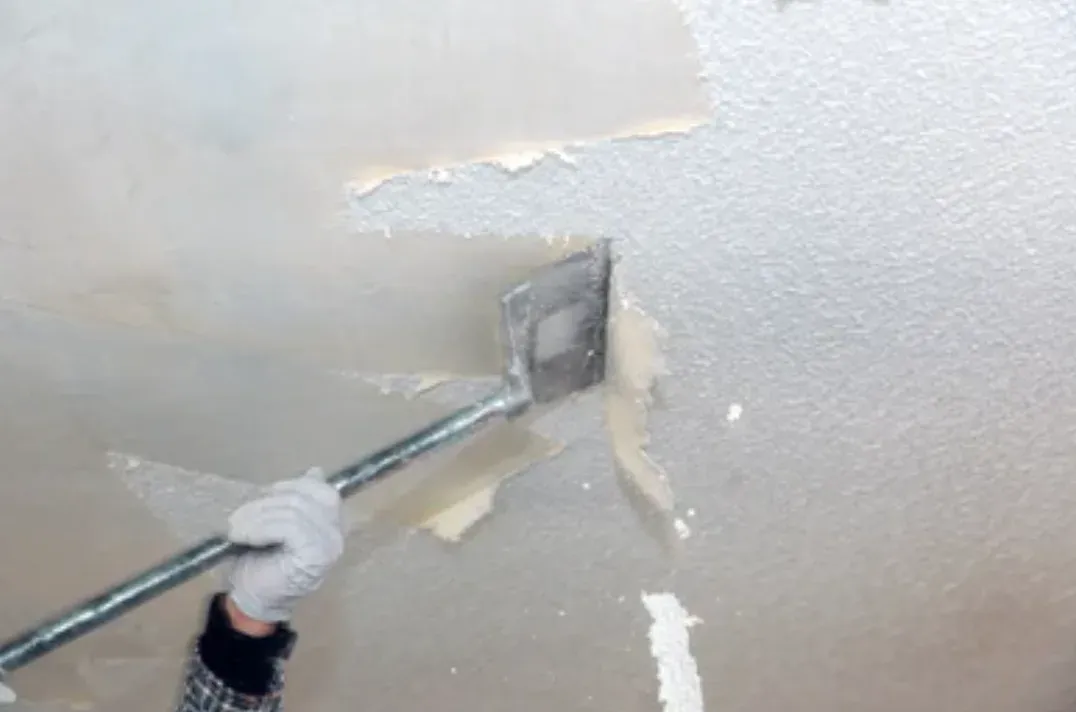
Wet-scraping a popcorn ceiling, wetting the texture down before removal to keep dust from becoming airborne, is standard practice, but it still generates real debris and takes the room out of normal use for the duration of the job. Brockton Precision Drywall protects flooring and furniture before starting and works room by room in occupied homes so the rest of the house stays livable, which matters most on multi-room or whole-house removal jobs where a family is living through the renovation rather than working around a vacant property. Setting that expectation clearly at the estimate stage, how long the room will be unusable and what containment looks like, avoids surprises once the work is underway.
Materials & standards
Products & materials we use
- USG Sheetrock
- National Gypsum Gold Bond
- joint compound
Standards & codes we work to
- EPA RRP (pre-1978 lead-safe practice)
- MA Dept. of Labor Standards (asbestos)
- MassDEP
- GA-214 finish levels
What the terms mean
- popcorn ceiling
- acoustic texture
- stipple texture
- wet scrape
- skim coat
- asbestos testing
- ceiling resurfacing
Options & variants
| Option | When it applies | Cost |
|---|---|---|
| Test and scrape (confirmed clear) | Ceiling tests negative for asbestos, standard wet-scrape removal proceeds | Lower to moderate cost |
| Scrape and full skim resurface | Removal followed by a smooth, appropriate finish rather than leaving a rough scraped surface | Moderate cost, better long-term result |
| Multi-room removal | Whole-house popcorn ceiling removal as part of a broader renovation or pre-listing update | Priced by total square footage, often a modest per-room efficiency |
| Abatement referral (positive test) | Testing confirms asbestos-containing material | Priced and handled separately by a licensed abatement contractor, not a standard drywall scope |
What affects cost
- • Whether testing is required based on the building's age, and the outcome of that test
- • Square footage of ceiling being treated and number of rooms
- • Whether the ceiling needs a full skim coat resurface after scraping or just a lighter smoothing pass
- • Furniture and floor protection needs, since scraping produces a fair amount of debris that has to be contained
- • Ceiling height and access, particularly in split-level or cathedral-ceiling rooms common in the city's postwar housing stock
What to expect
- 1
Describe the ceiling's age
The customer describes the ceiling and the home's approximate age, or the age of the ceiling texture if it was added later than the house itself.
- 2
Arrange testing if needed
If the ceiling falls in the asbestos-risk age window, testing is arranged before any other work begins; Brockton Precision Drywall will not scrape an untested ceiling in that age range.
- 3
Protect and scrape
Once confirmed clear, the room is protected, floors, furniture, fixtures covered, the texture is wetted down to control dust, and scraped off the ceiling substrate.
- 4
Skim coat and sand
The scraped ceiling is skim coated to a smooth, flat finish, sanded, and checked for any remaining texture or unevenness.
- 5
Prime and clean up
The ceiling is primed and left ready to paint, and the work area is cleaned of debris before the crew leaves.
When this isn’t the right call
- If the ceiling tests positive for asbestos, removal needs to go to a licensed asbestos abatement contractor before any drywall work proceeds.
- If the ceiling has active sagging, water staining, or structural concern in addition to the texture, address that first with ceiling repair.
- If the goal is actually to add or match a texture rather than remove one, texture matching is the better fit.
- If a full skim to Level 5 flatness across the whole ceiling and adjoining walls is the priority, not just texture removal, skim coat and Level 5 finish is the better fit.
Frequently asked questions
Does my ceiling need to be tested for asbestos before you remove it? +
If the ceiling texture is old enough to fall in the asbestos-risk age window, yes. Brockton Precision Drywall will not scrape an untested ceiling in that range and will arrange testing through a licensed provider first.
What happens if the test comes back positive? +
Removal of confirmed asbestos-containing material goes to a licensed asbestos abatement contractor, not a standard drywall crew. Brockton Precision Drywall can pick back up with skim coating and finishing once abatement is complete.
Is popcorn ceiling removal messy? +
It produces real debris, wetted texture scrapings mostly, so Brockton Precision Drywall protects floors and furniture before starting and cleans the space thoroughly after, but customers should expect the room to be out of use for the duration of the work.
Will the ceiling just be scraped, or will it look finished afterward? +
A scrape alone often leaves a rough, uneven surface. Brockton Precision Drywall follows the scrape with a skim coat so the ceiling is smooth and paint-ready, not just texture-free.
How long does removal take for a whole house? +
It depends on square footage and ceiling height, but a whole-house removal across several rooms takes longer than a single room and is usually scheduled over multiple days to allow for testing, scraping, and resurfacing properly.
My ceiling texture looks newer, not original to the house. Does it still need testing? +
Age of the texture itself matters more than the age of the house if it was added or redone later. Brockton Precision Drywall asks about the texture's actual application date, not just the home's build year, to judge whether testing applies.