
Signs you need this
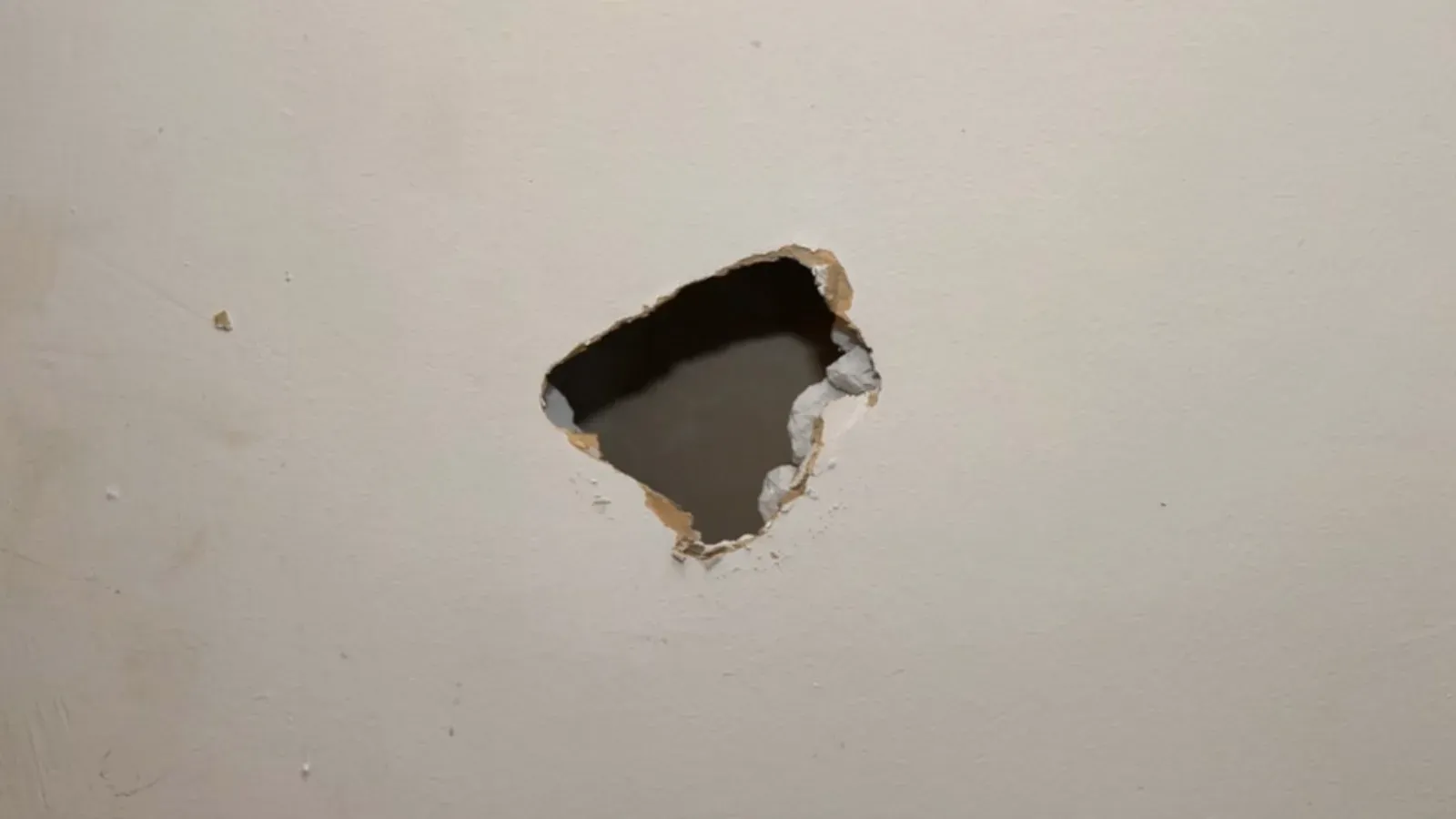
- • A doorknob hole punched through the wall, a fist-sized dent from moving furniture, or a chunk knocked loose by a dropped tool
- • A cluster of small holes left behind from a picture wall, a shelf bracket, or a TV mount that got relocated
- • A drywall anchor that pulled clean out of the wall, taking a piece of gypsum with it
- • A room being prepped to sell or list a rental unit where every wall needs to be clean before photos or a showing
- • A dent or hole that's been sitting long enough it's become an eyesore the household is tired of looking at
The everyday damage that doesn’t need a full renovation crew
Most drywall damage in a Brockton home isn’t dramatic. It’s a doorknob that swung too hard into the wall behind a bedroom door, a couch corner that dented the hallway on the way in, or the small forest of holes left behind after a gallery wall comes down before a repaint. In the postwar ranches and capes across Brockton Heights and the East Side, this kind of everyday wear is the most common call Brockton Precision Drywall gets, and it doesn’t call for the same crew or timeline as a gut renovation. A homeowner with three dents and a doorknob hole doesn’t want to wait a week for a scheduling slot meant for a whole-room job; they want someone who can look at photos, quote a fair price, and get it patched fast enough that it doesn’t become a lingering household annoyance.
Small hole versus structural patch: why size changes the method
Not every hole gets the same fix. A hole under an inch or two, like an anchor pull or a doorknob ding, can often be closed with a self-adhesive mesh patch and a few thin coats of joint compound, sanded flush and invisible once painted. A larger hole, from a dropped tool or a harder impact, needs backing added behind the cut-out drywall before the patch goes in, otherwise the repair has nothing solid to grip and will flex or crack again the first time it takes a bump. Brockton Precision Drywall sizes the fix to the damage rather than treating every hole the same way, because a patch without backing on a larger hole is a repair that fails again within months.
Prepping a rental unit or a listing: patching at volume
Landlords and property managers turning over a unit, and homeowners prepping a house to sell, both need something different from a one-off repair: every hole in the unit fixed in a single visit, on a schedule that matches a move-out date or a listing deadline. Brockton’s high renter share, especially in the triple-decker stock that dominates much of the city, means this kind of turnover patching is steady, recurring work rather than a one-time job. Brockton Precision Drywall walks the whole unit, counts and catalogs the damage, and quotes it as one job rather than a series of separate small repairs, which is faster for the customer and easier to schedule around a hard deadline.
Matching texture so the patch actually disappears
A technically sound patch that still shows once the wall is painted has failed the customer’s actual goal, which is a wall that looks untouched. Many Brockton homes, especially anything built or renovated from the 1970s through the 1990s, carry a light knockdown or orange-peel texture rather than a flat smooth wall, and a patch finished smooth in the middle of a textured wall reads as an obvious flat spot under any angled light. Brockton Precision Drywall matches the surrounding texture at the patch edge as a standard part of the job, not an upcharge, because a patch that’s structurally fine but visually obvious isn’t a finished job in the customer’s eyes.
Anchor pulls, corner dings, and knowing when a patch isn’t enough
A single anchor pull or corner ding is a straightforward patch. But a wall with a cluster of holes that keep reappearing in the same spot after being fixed, or cracking that shows up alongside the dents, is telling the customer something different is going on, whether that’s a wall taking repeated stress from a door that doesn’t close right or a settling issue that keeps reopening the same seam. Brockton Precision Drywall flags that distinction for the customer during the walkthrough rather than just patching over it again, because a recurring crack needs a different diagnosis and repair approach than a one-time dent.
Materials & standards
Products & materials we use
- USG Sheetrock
- National Gypsum Gold Bond
- Georgia-Pacific ToughRock
- FibaTape
- joint compound
Standards & codes we work to
- Massachusetts State Building Code (780 CMR)
- EPA RRP (pre-1978 lead-safe practice)
What the terms mean
- mud and tape
- corner bead
- backing
- joint compound
- drywall patch
- knockdown texture
- orange-peel texture
Options & variants
| Option | When it applies | Cost |
|---|---|---|
| Small hole patch (under 6 inches) | Doorknob holes, anchor pulls, single dents | Lowest cost, often same-day |
| Multi-hole patch pass | Picture wall or shelving takedown with several small holes | Priced by count and spread across the wall, still fast |
| Mid-size cut-in patch | Larger holes from impact damage, 6 to 24 inches | Moderate cost, requires backing and blend coats |
| Whole-wall skim after heavy patching | Wall with dense damage where spot patches would show through paint | Higher cost, most seamless result |
What affects cost
- • Number and size of holes, since one doorknob hole is a different job than a dozen anchor pulls across a living room wall
- • Whether the wall behind the hole needs backing material added before the patch can be structurally sound
- • Whether the existing wall has a texture, like knockdown or orange peel, that needs to be matched, or is a plain smooth finish
- • Paint matching, whether the customer wants the patch primed and left ready for their painter, or fully painted to match the existing wall color
- • Access and location, since a patch behind furniture or in a tight closet takes longer than open wall space
What to expect
- 1
Share the damage
The customer sends photos or describes the damage, how many holes, roughly how big, for an initial estimate.
- 2
Confirm scope and price
Brockton Precision Drywall confirms scope on site or from photos and gives a firm price before starting.
- 3
Cut back and set the patch
Damaged material is cut back to sound drywall, backing is added if the hole needs it, and the patch is set and taped.
- 4
Coat and blend texture
Joint compound is applied in thin coats, sanded smooth, and blended into the surrounding wall texture.
- 5
Prime and clean up
The patch is primed and left ready to paint, or painted to match if that's part of the job, with the work area left clean.
When this isn’t the right call
- If the crack keeps coming back after being patched, or new cracks keep appearing along the same wall, drywall crack repair is the better fit.
- If the damage is on the ceiling rather than a wall, especially with sagging or staining, ceiling repair is the better fit.
- If most of a room's walls need to come down rather than a handful of spot patches, drywall removal and demolition is the better fit.
- If the wall has a textured finish and the patch needs to blend seamlessly into knockdown or orange-peel rather than a smooth surface, texture matching is the better fit.
Frequently asked questions
Will you be able to match my wall's paint color? +
Brockton Precision Drywall can paint the patch to match if the customer supplies the paint or the color code, or the patch can be left primed and ready for the customer's own painter, whichever fits the job.
How long does a small hole patch take? +
Most single-hole patches are a same-day job for the initial patch and tape, though a return visit for final sanding and texture blend is common once the compound has fully cured.
I have a bunch of small holes from a picture wall, not one big hole. Is that a different kind of job? +
It's the same service, just priced by the number and spread of holes rather than one large repair. Brockton Precision Drywall handles multi-hole patch passes routinely for customers taking down gallery walls or shelving.
Do you patch holes left by a wall anchor that pulled out? +
Yes, an anchor pull-out is a common patch, and if the hole is more than a couple inches the crew adds backing behind the patch so it holds weight again if the customer wants to remount something there.
My landlord needs the unit patched before I move out. Can you turn it around quickly? +
Yes, move-out and unit-turnover patching is regular work for Brockton Precision Drywall, and the company can prioritize scheduling around a move-out or inspection deadline.
Will the patch be visible once it's painted? +
A properly patched and sanded repair should be invisible under normal light once painted, though a wall with a texture needs that texture matched at the patch, which Brockton Precision Drywall accounts for in the quote.