
Signs you need this
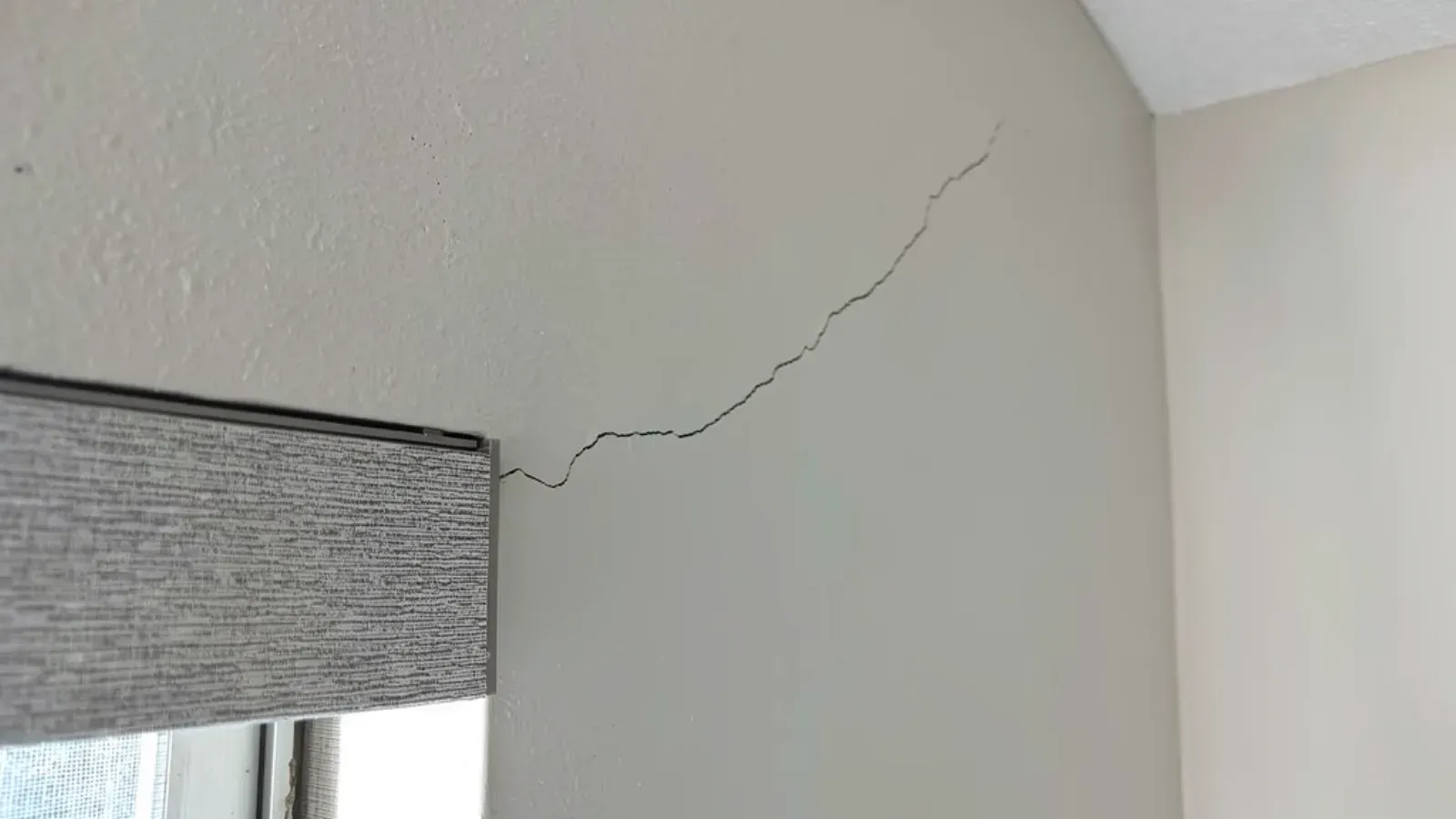
- • A thin diagonal crack running from the corner of a door or window frame up toward the ceiling
- • A crack along a corner bead that keeps reopening after paint
- • The same hairline crack returning in the same spot, sometimes months after it was last patched and painted
- • The same crack has been patched and painted more than once and keeps coming back
- • Cracks appearing at the same time as a house is being repainted or listed for sale, prompting a proper fix instead of another skim-coat
Why the same crack keeps coming back
Nothing frustrates a homeowner more than paying to patch a crack, watching it disappear under a coat of paint, and then seeing the same hairline line reappear six months later. This is the single most common complaint Brockton Precision Drywall hears about prior crack repairs, and it has a straightforward explanation: a crack is the visible symptom of something moving underneath it, and painting over the surface without addressing that movement just delays the next appearance. In the West Side’s older Victorian single-families, decades of gradual foundation settling produce a predictable pattern, diagonal cracks radiating from the top corners of door and window frames, because that’s where the wall structure concentrates stress as the house shifts fractions of an inch over the seasons. Filling the crack with compound and repainting treats the symptom for a season or two at most. Reinforcing the joint underneath with tape or mesh rated to flex with minor ongoing movement is what actually breaks the cycle.
Corner bead cracks are a different animal from mid-wall cracks
Not every crack runs through open wall. A crack that tracks precisely along an outside corner, where two walls meet at a 90-degree angle, usually isn’t a settling crack at all, it’s a sign the corner bead itself, the metal or vinyl strip that forms and protects that edge, has come loose from the framing behind it. Compound skimmed over a loose bead has nothing solid to bond to and will crack again almost immediately, often within a single season of temperature swings. Brockton Precision Drywall checks the bead’s fastening before touching the compound on any corner crack, and refastens or replaces it outright when it’s the actual cause, rather than repeating the same cosmetic fix that already failed once.
Reading a crack pattern across a whole room or floor
A single isolated crack tells a different story than three or four cracks appearing in a related pattern across a room, at similar heights, similar angles, radiating from the same wall or corner. Brockton Precision Drywall walks the whole room, not just the one crack the customer called about, because a pattern points to a shared cause, often ordinary seasonal settling in an older home, that’s worth understanding before quoting the repair. A homeowner in one of Brockton’s older single-families who’s dealt with the same recurring pattern for years usually isn’t looking at a structural emergency; they’re looking at a house that moves a little every winter and needs a repair method built to move with it rather than fight it.
When a crack signals something beyond normal settling
Most cracks Brockton Precision Drywall sees are cosmetic, the ordinary consequence of an older wood-frame house living through New England’s freeze-thaw cycles for a century. But some patterns are worth flagging rather than just patching: a crack that’s widening rather than staying the same width, one paired with a door or window that has stopped closing properly, or cracking that appears at the same time as visible gaps opening up at a roofline or foundation wall. Brockton Precision Drywall draws that line honestly with customers, and where a crack pattern looks like more than normal settling, the company will say so and point the customer toward a structural assessment before doing any cosmetic repair that would just mask a bigger issue.
Reinforced repair versus a quick skim: why the method matters more than the material
The compound used to fill a crack matters less than how the joint underneath is prepared. A quick skim over an unreinforced crack is fast and cheap, and it’s also exactly why so many Brockton homeowners find themselves calling about the same crack a second or third time. Brockton Precision Drywall’s standard crack repair opens the crack back to sound material, sets mesh or paper tape rated to handle continued minor flexing, and builds the joint up in thin layered coats feathered wide across the surrounding wall, so the repaired seam moves with the house rather than splitting at the first seasonal shift. It takes longer than a five-minute skim, and it’s the difference between a repair that lasts and one the customer will be calling about again next year.
Materials & standards
Products & materials we use
- USG Sheetrock
- National Gypsum Gold Bond
- FibaTape
- joint compound
Standards & codes we work to
- Massachusetts State Building Code (780 CMR)
What the terms mean
- corner bead
- settling crack
- mesh tape
- mud and tape
- seam reinforcement
- plaster and lath
Options & variants
| Option | When it applies | Cost |
|---|---|---|
| Single crack repair with mesh reinforcement | One recurring crack, first proper repair after prior cosmetic patches | Lower cost, single visit |
| Corner bead replacement | Cracking along an outside wall corner where the bead itself has come loose | Moderate cost, requires removing and refastening bead |
| Multi-crack settling pass | Several related cracks across a room or floor from the same movement pattern | Moderate to higher cost, priced by count and spread |
| Elastomeric or flexible-joint repair | Recurring crack at a known stress point that has failed standard repair before | Higher cost, most durable against re-cracking |
What affects cost
- • How many cracks are being addressed and whether they're isolated or spread across a room or floor
- • Whether the crack is in a plaster wall, which takes more labor to open and stabilize, or a modern drywall seam
- • Whether a corner bead needs to be removed and refastened or replaced outright
- • Paint matching after the repair, since a crack repair that isn't blended into the surrounding wall color still looks unfinished
- • Access, particularly for cracks at ceiling height or above stairwells in older Victorians
What to expect
- 1
Describe the history
The customer describes the crack, including whether it's been patched before and how quickly it came back.
- 2
Inspect the pattern
Brockton Precision Drywall inspects the crack pattern on site, checking whether it's isolated, tied to a corner bead, or part of a broader settling pattern across the room or house.
- 3
Open and reinforce
The crack is opened back to sound material, any loose corner bead is refastened or replaced, and the joint is reinforced with tape or mesh rated to handle ongoing minor movement.
- 4
Layer and feather
Compound is applied in layers, feathered wide so the repair blends into the surrounding wall plane rather than sitting as a raised ridge.
- 5
Prime and flag next steps
The area is primed and left ready to paint, or painted to match, and the crew explains what to watch for if the crack is part of a pattern the customer should keep an eye on elsewhere in the house.
When this isn’t the right call
- If the damage is a hole, dent, or anchor pull rather than a crack, drywall repair and patching is the better fit.
- If the crack is on the ceiling and accompanied by sagging or water staining rather than a simple hairline seam, ceiling repair is the better fit.
- If cracking is severe, structural, or accompanied by visible foundation movement, doors that won't close, or gaps at the roofline, a structural engineer or foundation contractor should be consulted before any drywall repair.
- If the wall needs to come down entirely rather than a targeted crack repair, drywall removal and demolition is the better fit.
Frequently asked questions
I've patched this same crack twice already. Why does it keep coming back? +
A crack that reopens after being patched almost always means the underlying movement was never addressed, just the visible line. Brockton Precision Drywall reinforces the joint itself, not just the surface, so the repair holds through normal seasonal flexing.
Is a diagonal crack over my door frame a sign of a structural problem? +
In older homes, a diagonal crack at a door or window corner is often ordinary settling rather than a structural issue, but Brockton Precision Drywall will flag anything that looks beyond normal movement, like a crack paired with a door that's stopped closing properly, and recommend a structural assessment first.
What's a corner bead, and why does mine keep cracking? +
Corner bead is the strip, usually metal or vinyl, that forms the edge at an outside wall corner. It cracks when the bead itself has loosened from the wall behind it, and simply skimming compound over a loose bead will crack again, so Brockton Precision Drywall checks and refastens or replaces the bead as part of the repair.
Should I worry about cracks in my old Victorian on the West Side? +
Older homes settle gradually over decades, and a pattern of hairline cracks at doors, windows, and corners is common and usually cosmetic. Brockton Precision Drywall looks at the pattern as a whole rather than one crack in isolation to confirm it's ordinary settling.
Will the repaired crack be invisible after painting? +
A properly reinforced and feathered crack repair should be invisible under normal light once painted and blended into the surrounding wall texture.
How long before I can repaint after a crack repair? +
Once the final coat of compound is fully dry, usually within a day or two depending on humidity, the area is ready to prime and paint.