
Signs you need this
- • A renovation or gut-reno plan that requires clearing existing walls and ceilings down to the studs and joists before new work can start
- • Old plaster and lath walls in a triple-decker unit that are too far gone, or too outdated for the renovation plan, to repair rather than replace
- • Widespread water or mold damage across a wall or ceiling that's beyond spot repair and needs full removal
- • A renovation start date on the calendar and a need for demolition done cleanly and on schedule before framing or new drywall can go in
- • An inspection or a contractor's assessment flagging old plaster, lead paint, or suspected asbestos-containing material that needs to be handled correctly before removal begins
Demolition as the first phase of a renovation, not an afterthought
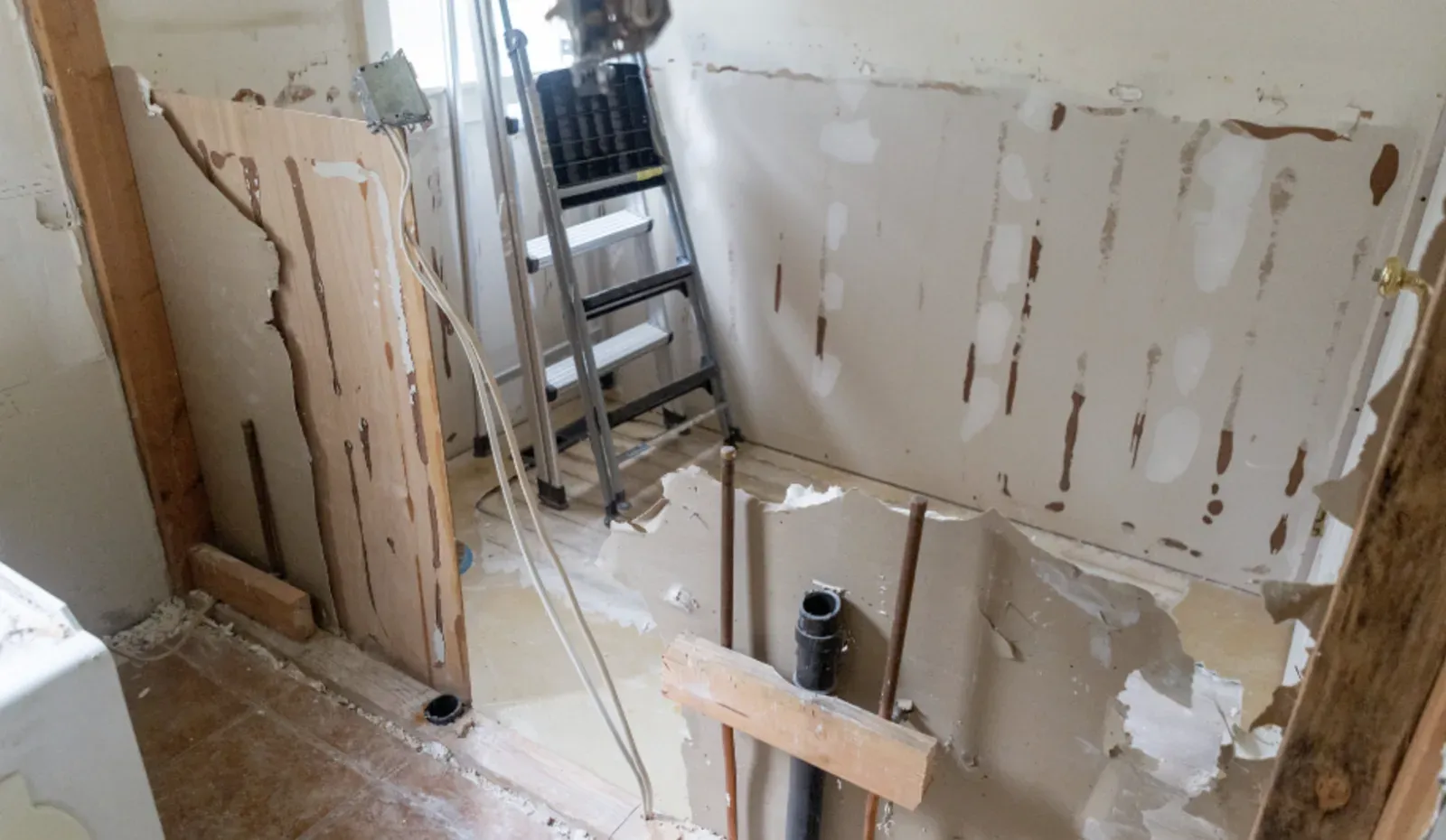
In Campello’s historic shoe-district triple-deckers, where entire blocks of housing went up during Brockton’s manufacturing boom and haven’t been substantially reworked since, a renovation almost always starts the same way: someone has to clear out what’s there before anything new can go in. Brockton Precision Drywall treats demolition as its own scoped phase of a project rather than a quick step before the real work begins, because how it’s done, what containment goes up, how debris moves out of a dense city lot, sets the pace for every trade that follows. A general contractor with a framing crew booked for the following week needs the space cleared, clean, and ready on schedule, and that reliability is what makes demolition worth scoping properly rather than treating it as an afterthought.
Plaster and lath removal is a heavier, slower job than drywall
Modern drywall comes down fast: score it, break it out in sections, bag it, move on. Original lath and plaster, the wood strips and hand-troweled plaster that make up most of Brockton’s pre-war housing stock, is a different job entirely. The plaster itself is dense and breaks into heavy chunks rather than clean sheets, the wood lath underneath has to be pried off the studs separately, and the combined weight means more trips to the dumpster and more disposal cost for the same square footage compared to drywall. Brockton Precision Drywall prices plaster and lath removal accordingly rather than quoting it like a modern drywall tear-out, because underestimating the labor and disposal weight on an old plaster job is one of the most common ways a demolition estimate goes wrong.
Lead and asbestos: what the city’s building age means for tear-out
Nearly all of Brockton’s core housing predates 1978, which means EPA RRP lead-safe practice isn’t optional paperwork, it’s standard procedure on almost every demolition job in the city. Painted plaster and old trim get handled under lead-safe containment and cleanup protocols by default. Ceiling material is a separate concern: textured or troweled ceiling finishes installed before the early 1980s carry a real possibility of asbestos content, and Brockton Precision Drywall flags that age window before cutting into a ceiling rather than assuming it’s clear. Where testing is warranted, the company coordinates with a licensed asbestos testing provider before any removal proceeds, because cutting into asbestos-containing material without proper handling is a health hazard that no renovation timeline is worth risking.
Containment in occupied buildings: keeping the rest of the property livable
A vacant gut renovation is one kind of job. A one-unit tear-out in an occupied triple-decker with tenants living upstairs and next door is another, and it’s the more common scenario in Campello’s dense housing stock. Dust from drywall and plaster demolition travels further than most homeowners expect, settling into hallways, adjoining units, and HVAC returns if it isn’t contained at the source. Brockton Precision Drywall seals the work zone with plastic sheeting and negative airflow where needed before the first cut, and works methodically room by room rather than opening the whole space at once, so tenants and neighboring units aren’t dealing with dust and debris from a job they’re not part of.
What comes after the tear-out: setting up the next phase
A clean demolition is only useful if it sets the next trade up to succeed. Brockton Precision Drywall leaves a space broom-clean, framing exposed and accessible, and any conditions worth flagging, deteriorated framing, old wiring in the wall cavity, signs of past water intrusion, documented for the contractor or homeowner before closing the walls back up. For renovations where new drywall, a skim coat finish, or soundproofing between units is the next step, having everything open at once is the moment to make those calls, since retrofitting resilient channel or mass-loaded board into a finished wall later costs far more than adding it while the studs are already exposed.
Materials & standards
Products & materials we use
- N/A (removal-focused; disposal and containment materials, not finish products)
Standards & codes we work to
- Massachusetts State Building Code (780 CMR)
- EPA RRP (pre-1978 lead-safe practice)
- MA Dept. of Labor Standards (asbestos)
- MassDEP
What the terms mean
- interior demolition
- dust containment
- lath and plaster
- gut renovation
- tear-out
- plaster removal
- debris disposal
Options & variants
| Option | When it applies | Cost |
|---|---|---|
| Single room tear-out | One room or unit being renovated, walls and/or ceiling | Lower cost, single containment zone |
| Whole-unit gut demolition | Full apartment or floor gutted for a larger renovation | Moderate to higher cost, priced by square footage and material type |
| Plaster and lath removal | Older triple-decker or Victorian units with original plaster walls | Higher labor cost than modern drywall due to weight and lath disposal |
| Water/mold-driven tear-out | Damaged section removed to expose and dry the structure behind it, ahead of repair | Priced by extent of damage, often time-sensitive |
What affects cost
- • Whether the material being removed is modern drywall, lighter and faster to remove, or old plaster and lath, heavier, slower, and more disposal weight
- • Square footage and number of rooms or units being demolished
- • Whether pre-1978 conditions require lead-safe handling under EPA RRP practices, or whether ceiling texture needs asbestos testing before removal
- • Disposal and dumpster logistics, particularly in dense triple-decker blocks with limited street access for a dumpster or debris chute
- • Whether the property stays occupied during demolition, which requires tighter containment and a different pace than a vacant unit
What to expect
- 1
Share the scope
The contractor or homeowner shares the renovation scope, timeline, and which rooms or units need to be cleared.
- 2
Assess material and conditions
Brockton Precision Drywall visits the site to assess material type, drywall versus plaster and lath, age of the building, and any conditions that need testing or special handling before removal.
- 3
Set up containment
Containment is set up, including dust barriers and floor protection, before any cutting or tear-out begins.
- 4
Remove and dispose
Material is removed room by room, bagged or bundled for disposal, and the space is left broom-clean and ready for the next trade.
- 5
Haul off and hand off
Debris is hauled off site, and the crew confirms the space is ready for framing, rewiring, or new drywall to begin.
When this isn’t the right call
- If only a small section of wall or ceiling is damaged and the rest of the wall is sound, drywall repair and patching or ceiling repair is the better fit.
- If the goal is just removing an outdated textured ceiling finish rather than a full room or unit tear-out, popcorn ceiling removal is the better fit.
- If suspected asbestos-containing material is confirmed present, a licensed asbestos abatement contractor needs to handle removal before any drywall demolition proceeds.
- If the plan is to keep the existing plaster walls but bring them to a smooth modern finish rather than tear them out, skim coat and Level 5 finish is the better fit.
Frequently asked questions
Do you test for asbestos before removing old plaster or ceiling material? +
Brockton Precision Drywall flags material old enough or textured in a way that warrants testing, and coordinates with a licensed asbestos testing provider before removal proceeds on anything suspect, rather than assuming it's safe based on age alone.
My triple-decker unit still has original plaster walls. Is that harder to remove than drywall? +
Yes, plaster and lath is heavier and slower to remove and dispose of than modern drywall, and Brockton Precision Drywall prices and schedules it accordingly rather than treating it the same as a drywall tear-out.
Can you demo just one room while the rest of the house stays occupied? +
Yes, this is common in Campello's occupied triple-deckers and multi-families. Brockton Precision Drywall sets up dust containment around the work zone so the rest of the property stays livable during the tear-out.
Who handles the debris and disposal? +
Brockton Precision Drywall bags and hauls the removed material as part of the job, including coordinating dumpster or debris logistics on tighter city lots where street access is limited.
We're a general contractor. Can you work directly with our renovation schedule? +
Yes, demolition scoped as a scheduled phase of a larger renovation is regular work for Brockton Precision Drywall, and the company coordinates timing with the GC's framing, electrical, or plumbing trades that follow.
How is demolition priced compared to a repair job? +
Demolition is priced by square footage, material type, and disposal logistics rather than the homepage's $/sqft installed pricing, since removal and disposal is a different scope than installing and finishing new drywall.